
When designing a kitchen or bathroom, most people spend a lot of time selecting the right stone — but the edge profile is equally important. It frames the entire countertop and contributes significantly to the overall style of the space. Whether you're going for something clean and modern or classic and ornate, choosing the right edge is one of the easiest ways to personalize your stone fabrication project.
Here's a complete look at the most popular countertop edge profiles and how to decide which one fits your space.
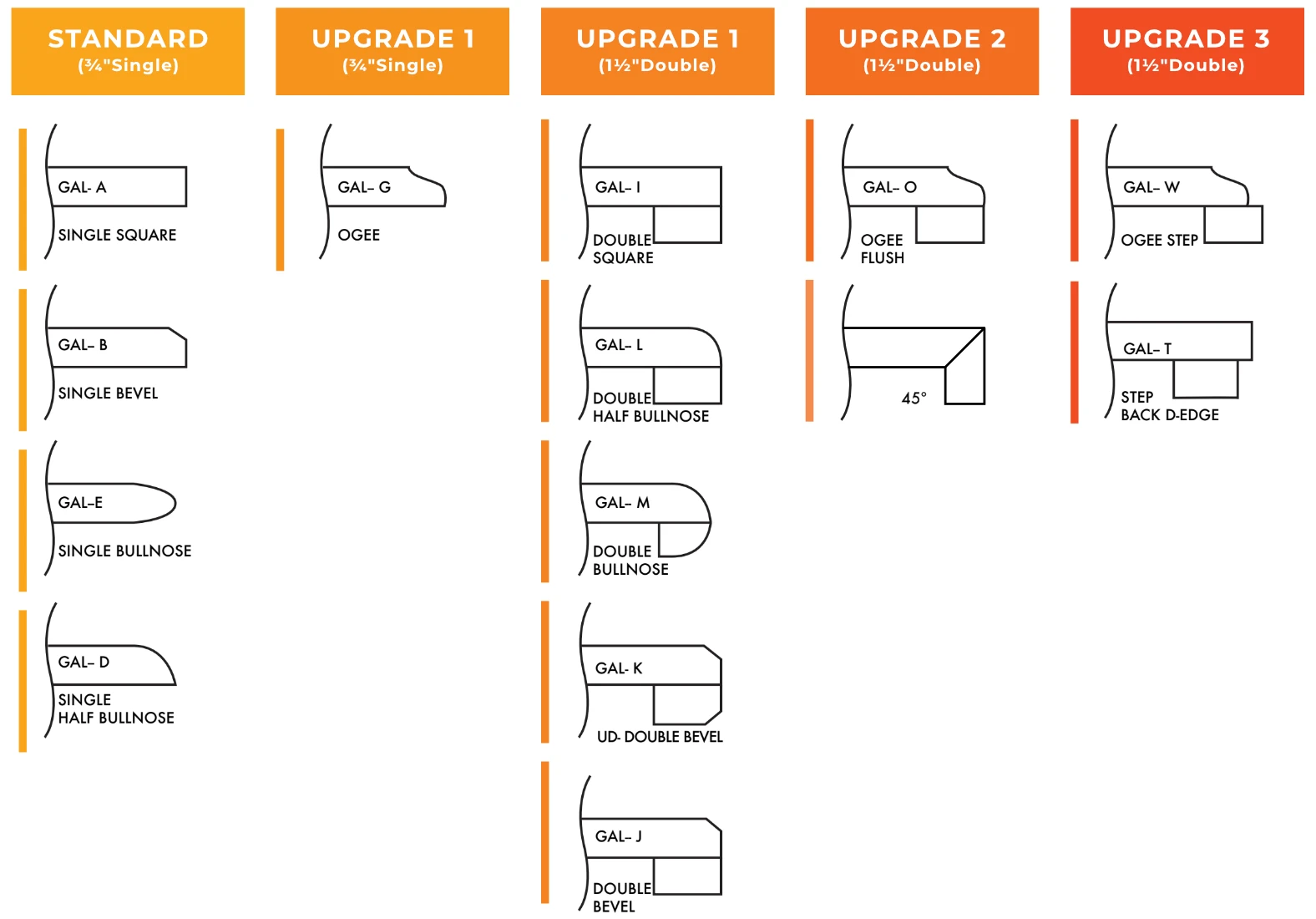
Our edge profiles fall into two thickness tiers: a single slab edge, and a double edge, where a second strip of stone is laminated underneath the front edge to make a standard slab look and feel twice as thick. From there, profiles range from a plain standard cut up to more decorative upgrade options.
Single Square
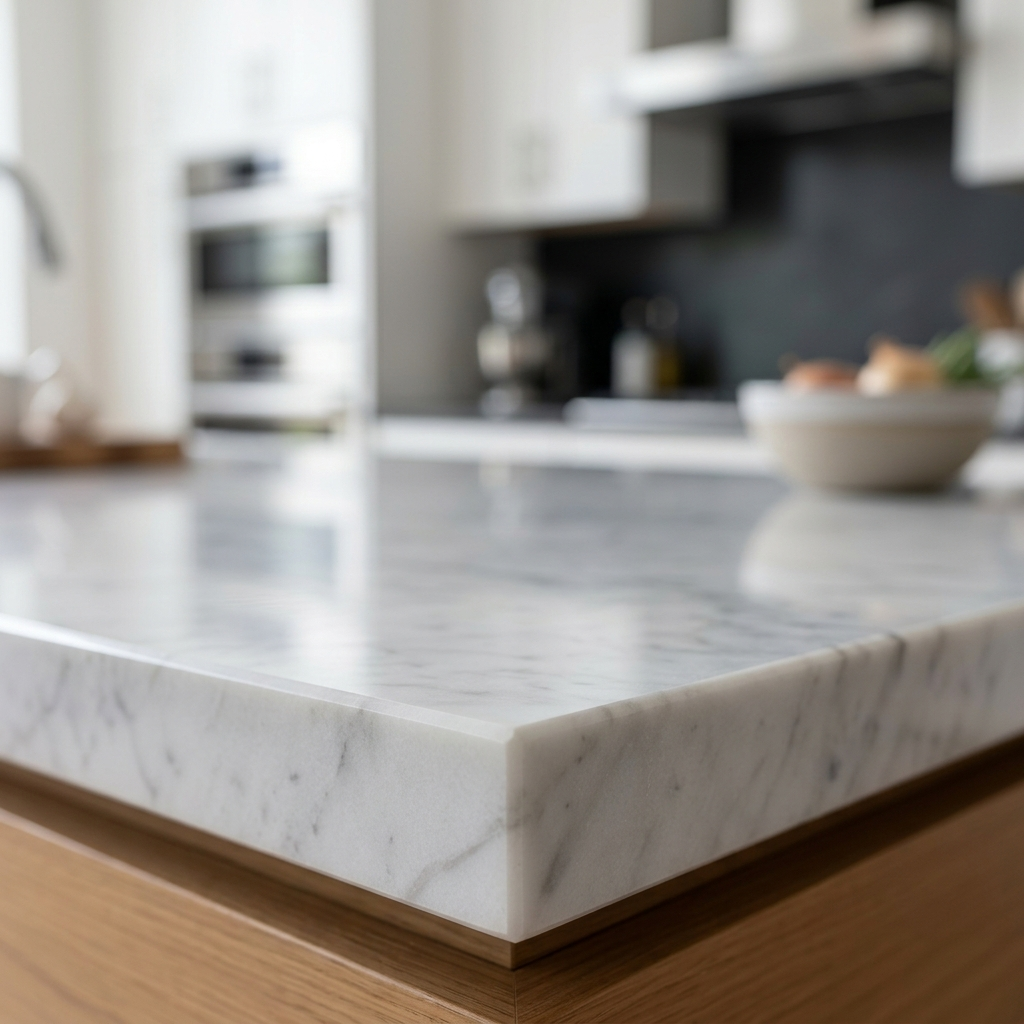
The single square edge is our standard, most economical profile — a clean 90° edge on a single slab with no rounding or angling at all.
Appearance: Flat and perfectly geometric, with a crisp right angle along the full length of the edge.
Best for: Modern, minimalist, and transitional kitchens. Works with virtually any stone.
Why choose it: It's understated, timeless, and lets the stone do the talking. If you have a heavily veined marble or a bold granite, a square edge keeps the focus on the material itself.
Single Bevel
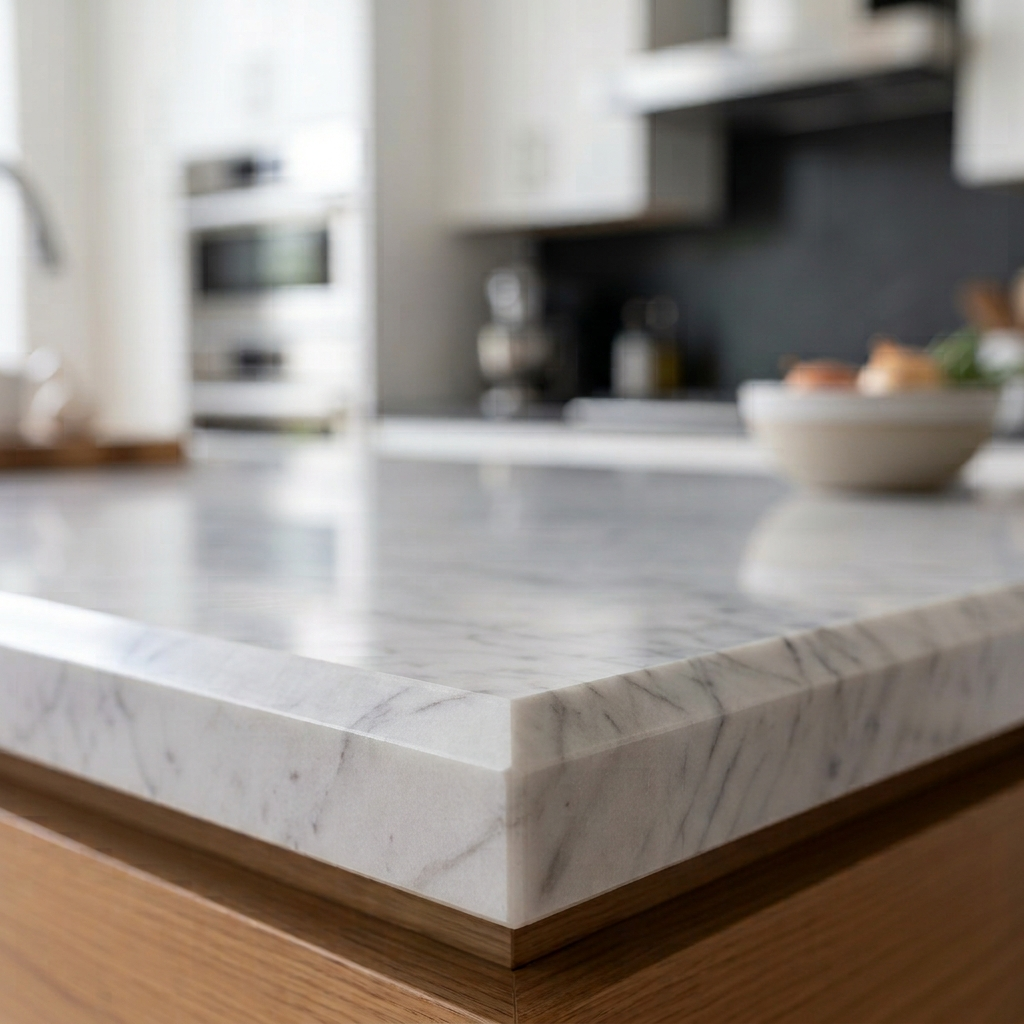
The single bevel takes that same single slab and adds an angled cut along the top of the edge, softening the square line without introducing any curves.
Appearance: Crisp and angular. Catches light along the angled face, adding dimension.
Best for: Kitchens and bathroom vanities where you want a bit more visual interest than a plain square edge, without going fully decorative.
Why choose it: The bevel adds elegance and sophistication while remaining clean and modern — a great middle ground between purely minimal and more traditional profiles.
Single Bullnose
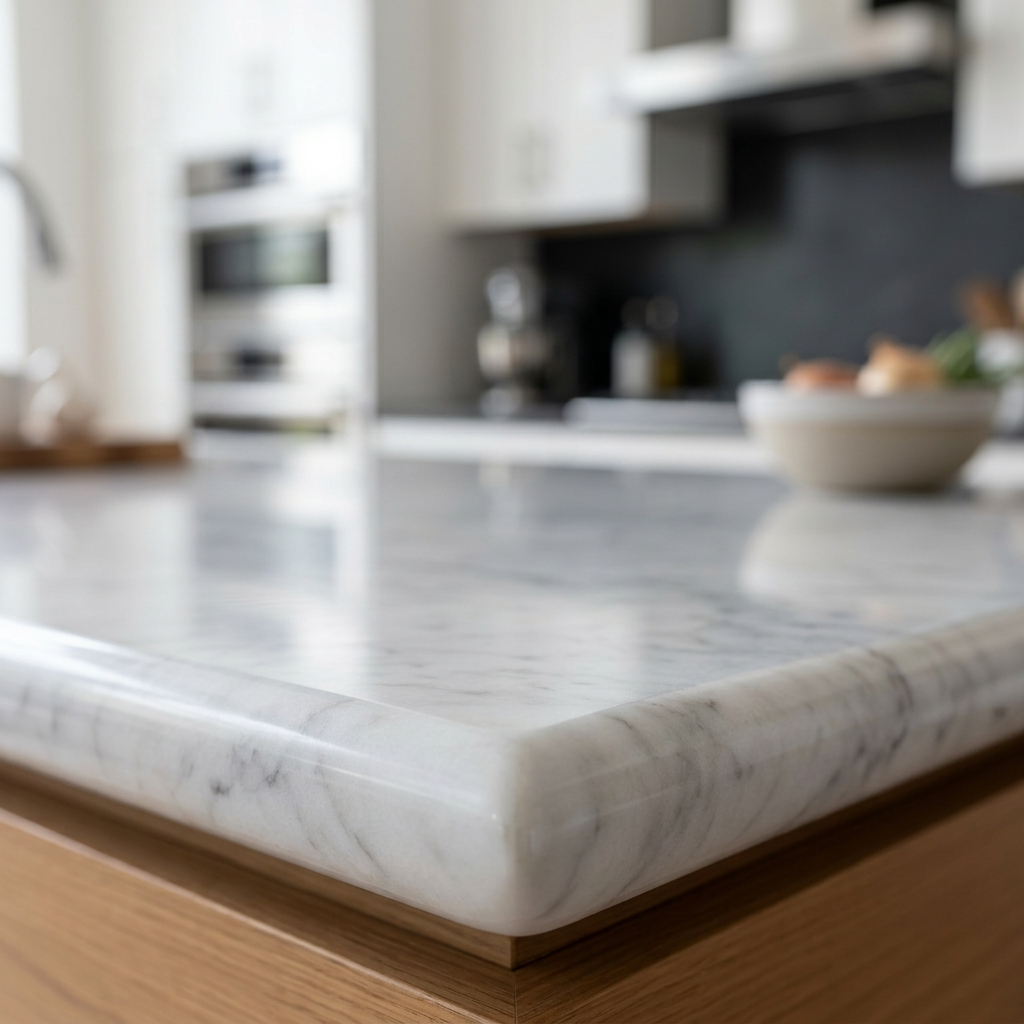
The single bullnose is a standard-tier profile that's fully rounded from the top of the edge down to the underside, with no flat vertical face at all.
Appearance: Fully rounded, almost pill-shaped when viewed from the front.
Best for: Family kitchens, bathroom vanities, and laundry rooms where safety and comfort are priorities.
Why choose it: The rounded edge is gentle on hips and hands — ideal for households with children — and has a warm, classic quality that suits traditional and cottage-style kitchens.
Single Half Bullnose
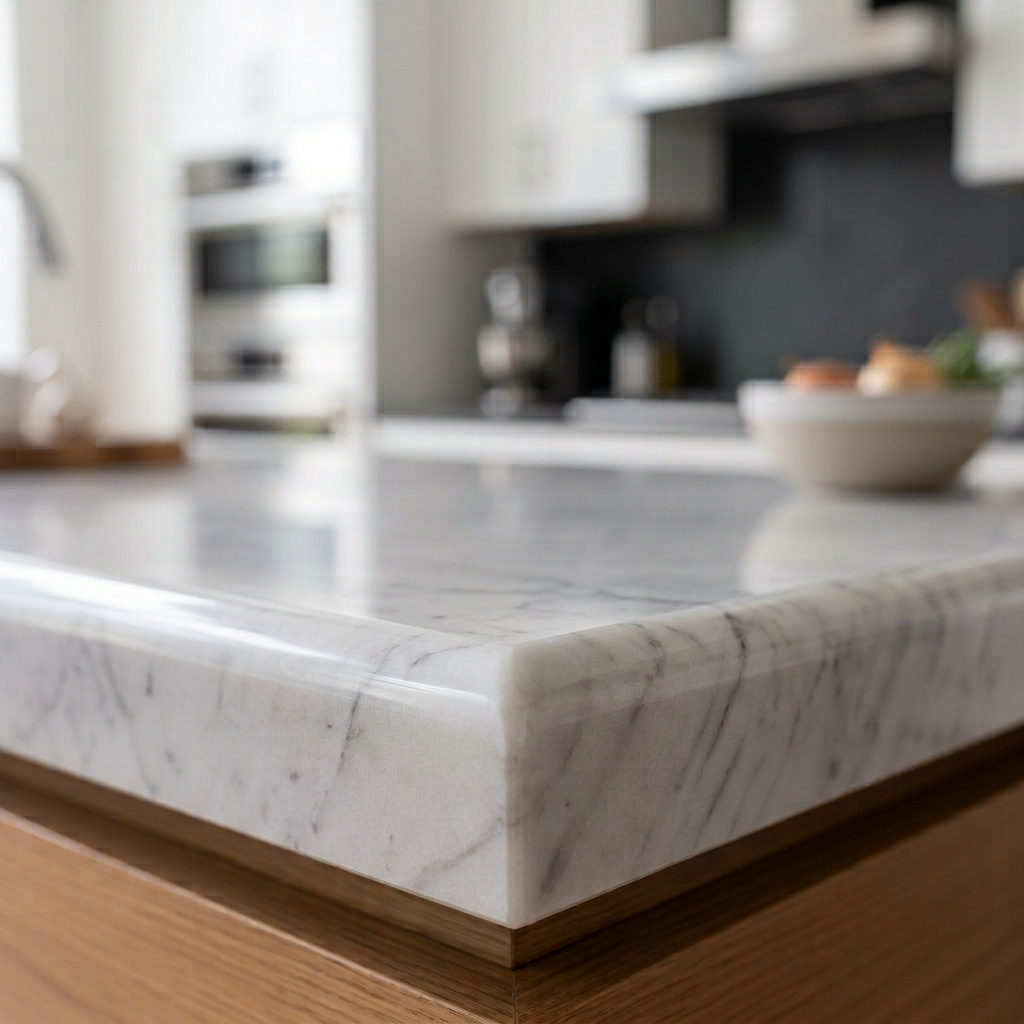
The single half bullnose rounds off just the top corner of a single slab, curving down into a flat vertical face rather than continuing all the way around.
Appearance: Soft and rounded on top, flat on the underside. Friendly and approachable.
Best for: Family kitchens and bathroom vanities where safety and comfort are priorities, while keeping a cleaner face than a full bullnose.
Why choose it: It's one of the most common profiles in traditional and transitional kitchens — a comfortable, approachable edge that pairs naturally with painted cabinetry.
Double Square
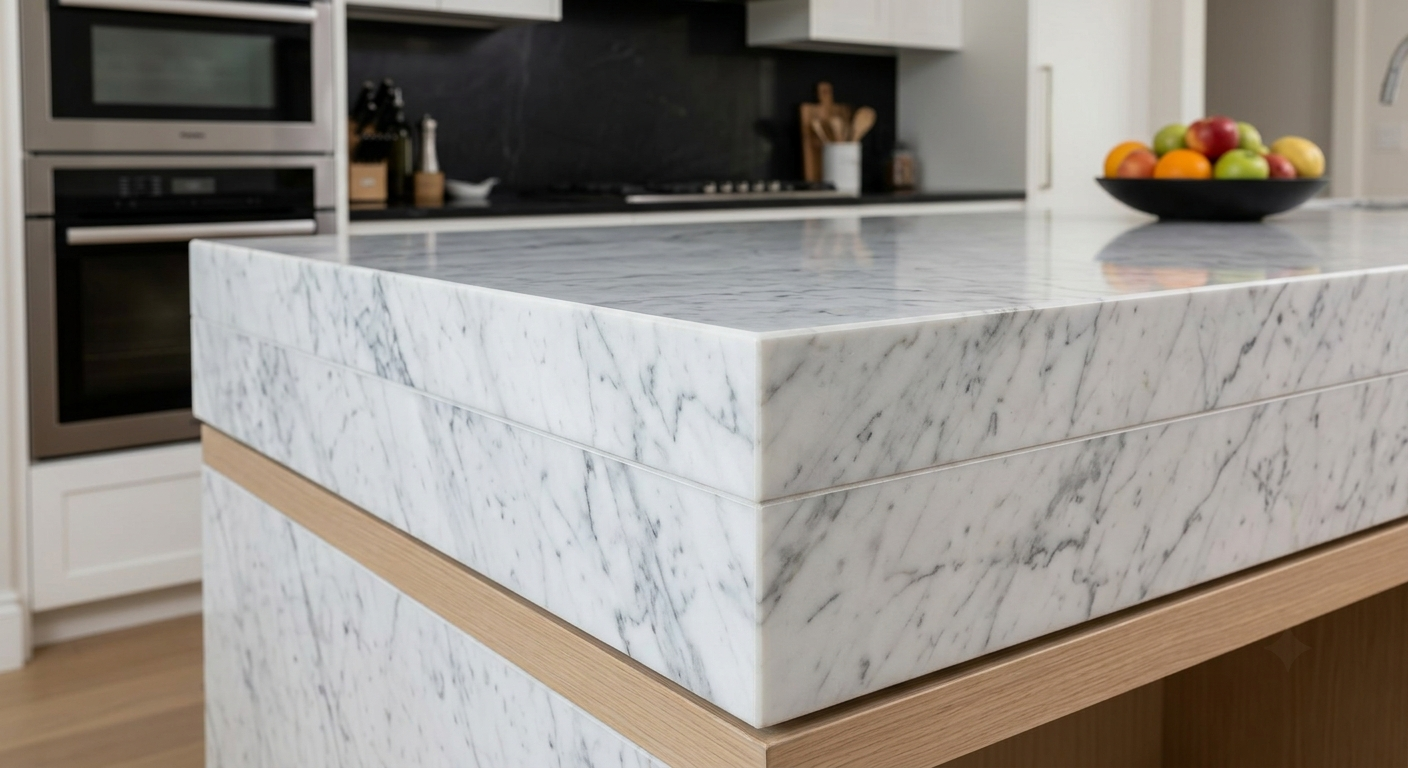
Moving into our double-thickness tier, the double square edge builds up a second layer of stone beneath the front edge, then finishes it with the same crisp, flat square profile.
Appearance: Flat and square, but visibly thicker — the built-up edge reads as a substantial double-thickness slab rather than a single one.
Best for: Kitchens and islands where a heftier, more substantial-looking countertop is desired without a fully decorative edge.
Why choose it: You get the bold, thick-slab look at a lower cost than solid thick stone, while keeping the clean, modern lines of a square edge.
Double Half Bullnose
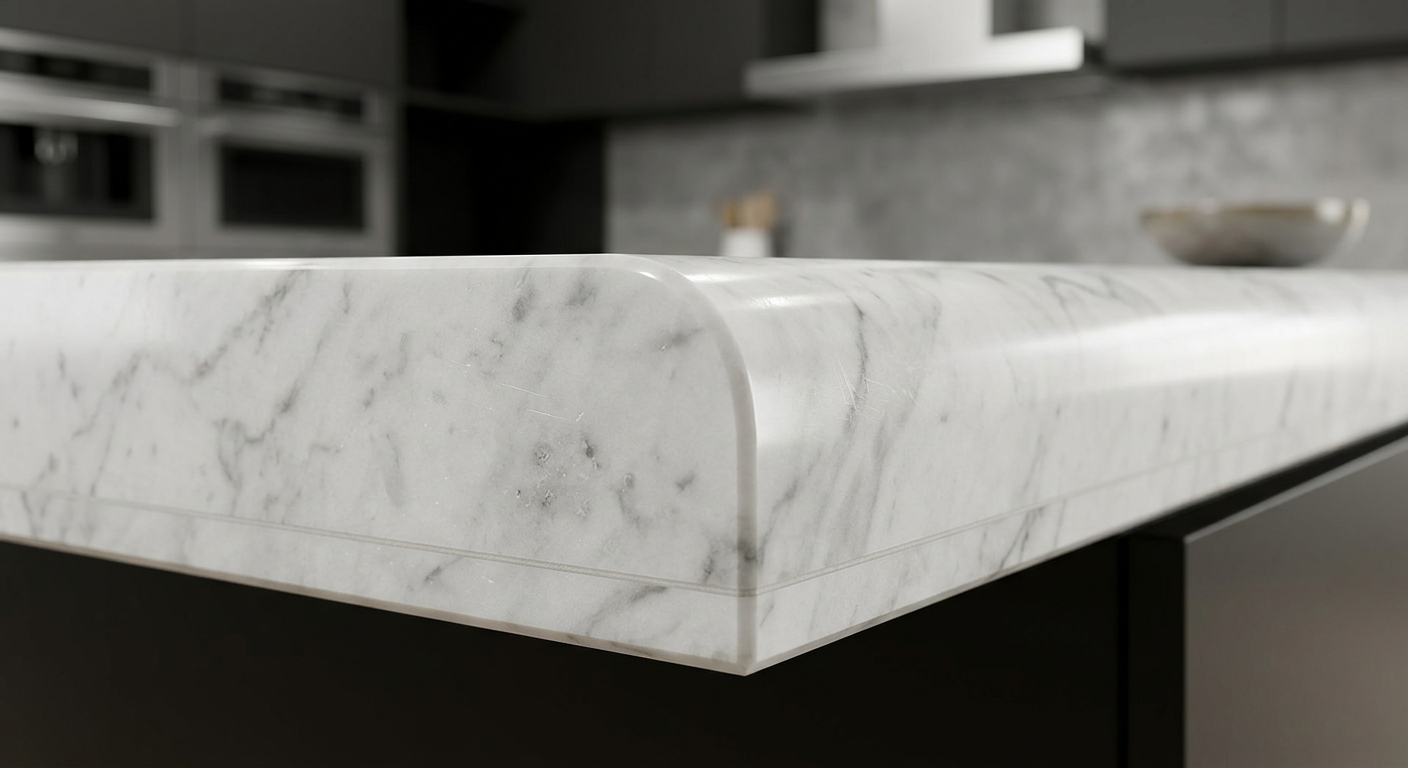
The double half bullnose applies the same rounded-top, flat-face profile as the single half bullnose, but on our built-up double edge.
Appearance: Soft rounded top transitioning to a flat vertical face, with the added visual heft of the doubled edge.
Best for: Family kitchens and bathroom vanities where you want both a substantial look and a soft, safe edge.
Why choose it: It combines the comfort of a rounded top with the presence of a thicker countertop — a popular choice for busy family kitchens.
Double Bullnose
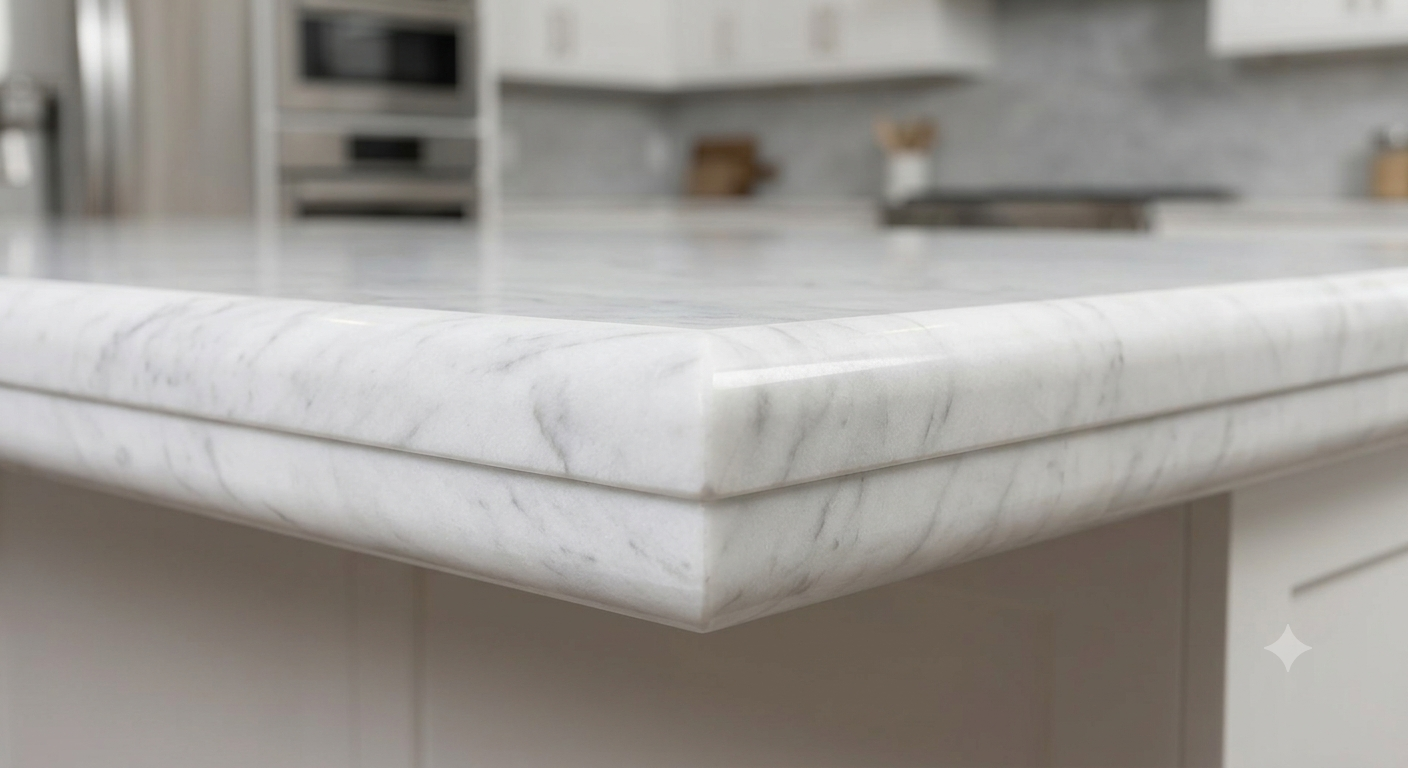
The double bullnose is a fully rounded profile — top and bottom — built onto our double edge for a substantial, continuously curved look.
Appearance: Smooth and fully rounded from front face to underside, with noticeably more presence than the single bullnose.
Best for: Traditional kitchens and bathroom vanities where a soft, rounded, substantial edge is the goal.
Why choose it: It has a warm, classic quality that fits beautifully in traditional and cottage-style kitchens, while the added thickness makes it feel more substantial underhand.
UD-Double Bevel
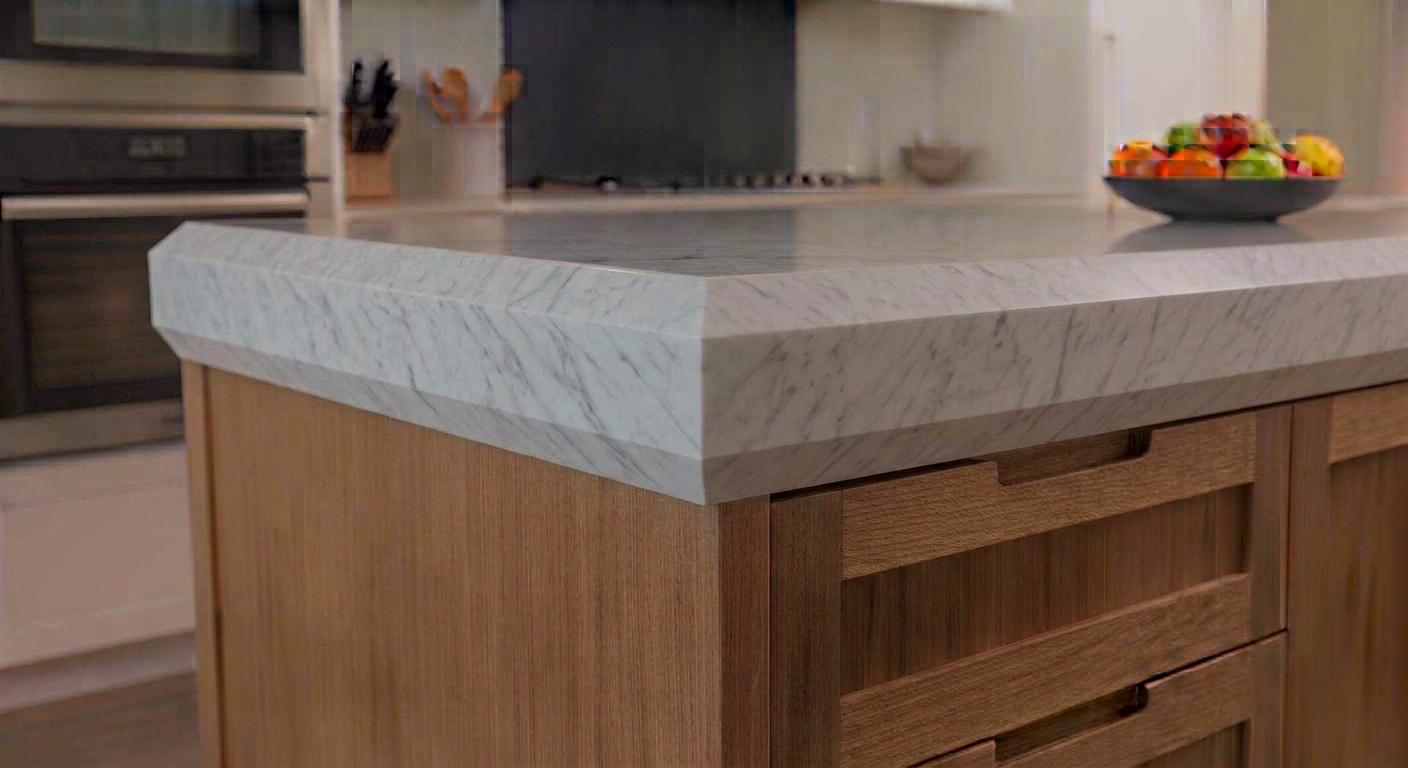
The UD-double bevel adds an angled bevel cut along the top of our built-up double edge, giving the doubled slab the same crisp, angular detail as the single bevel.
Appearance: Crisp and angular on top, with the added depth of the doubled edge below.
Best for: Transitional kitchens and islands where you want the bold look of a thick countertop paired with clean, angular lines.
Why choose it: It's a great middle ground — modern and understated on top, but with the visual weight of a much thicker slab.
Double Bevel
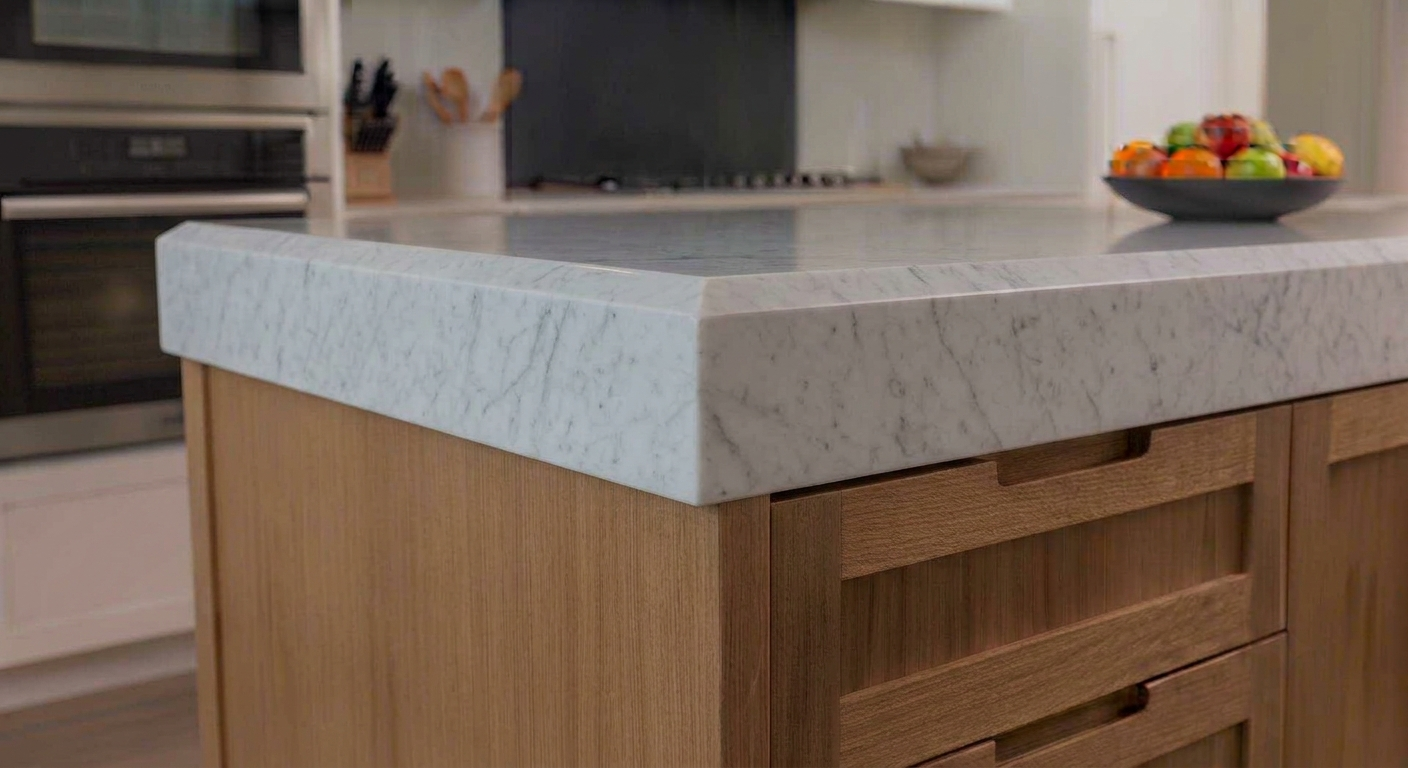
The double bevel is our double-thickness take on the beveled edge, with the angled cut proportioned to suit the taller, built-up profile.
Appearance: A wider, more pronounced angled face than the single bevel, thanks to the extra height of the double edge.
Best for: Kitchen islands and perimeter counters where a thicker, more dramatic bevel is desired.
Why choose it: The larger bevel face catches more light and reads as a more deliberate, high-end detail than the single-slab version.
Ogee Flush
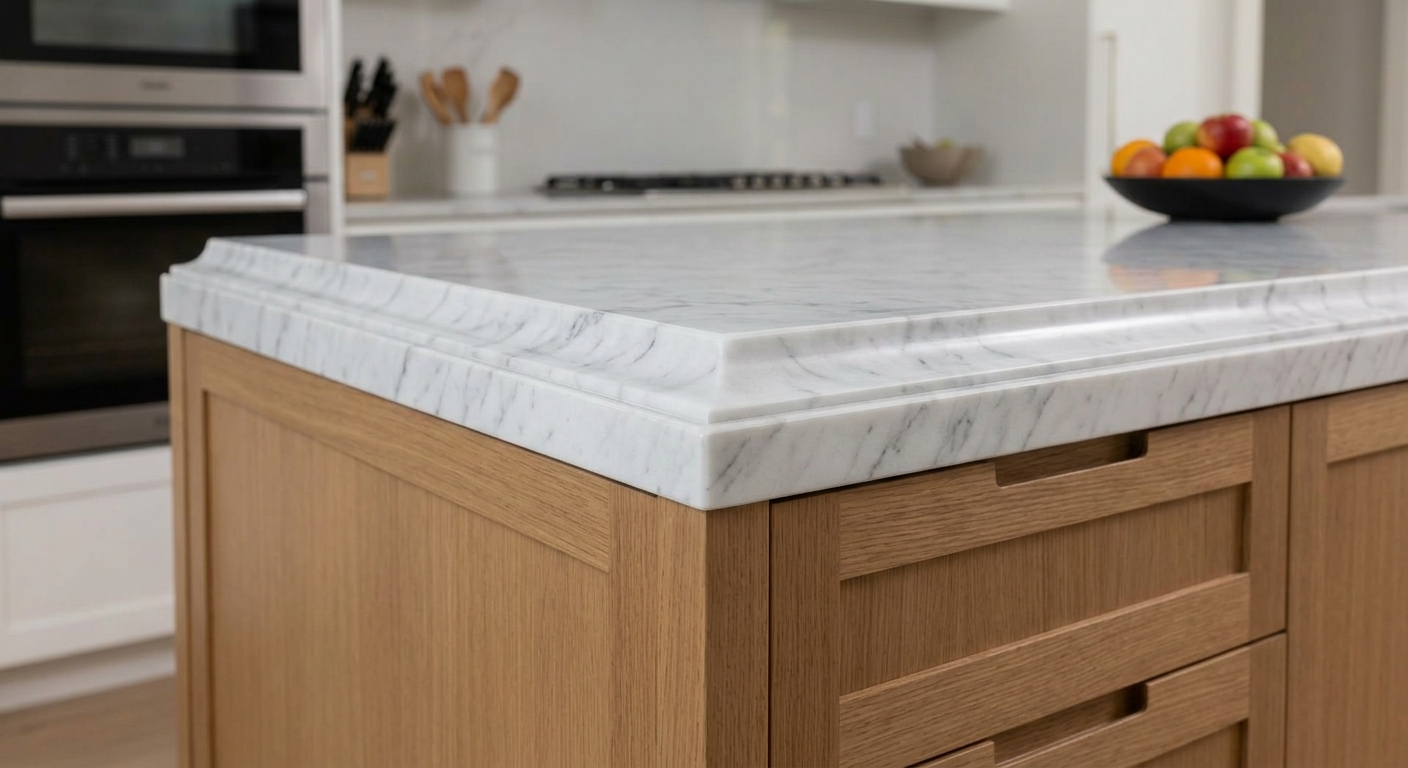
The ogee flush profile brings the classic S-curve of the ogee edge to our double edge, with the curve finishing flush against the doubled layer beneath.
Appearance: An elegant, flowing S-curve on top that sits flush with the built-up edge below — decorative on top, clean underneath.
Best for: Traditional, Victorian, and Mediterranean-style kitchens looking for an ornate detail with a tidy finish.
Why choose it: It delivers the formal, high-end character of an ogee curve while keeping the underside of the edge simple and streamlined.
Mitered Edge (45°)
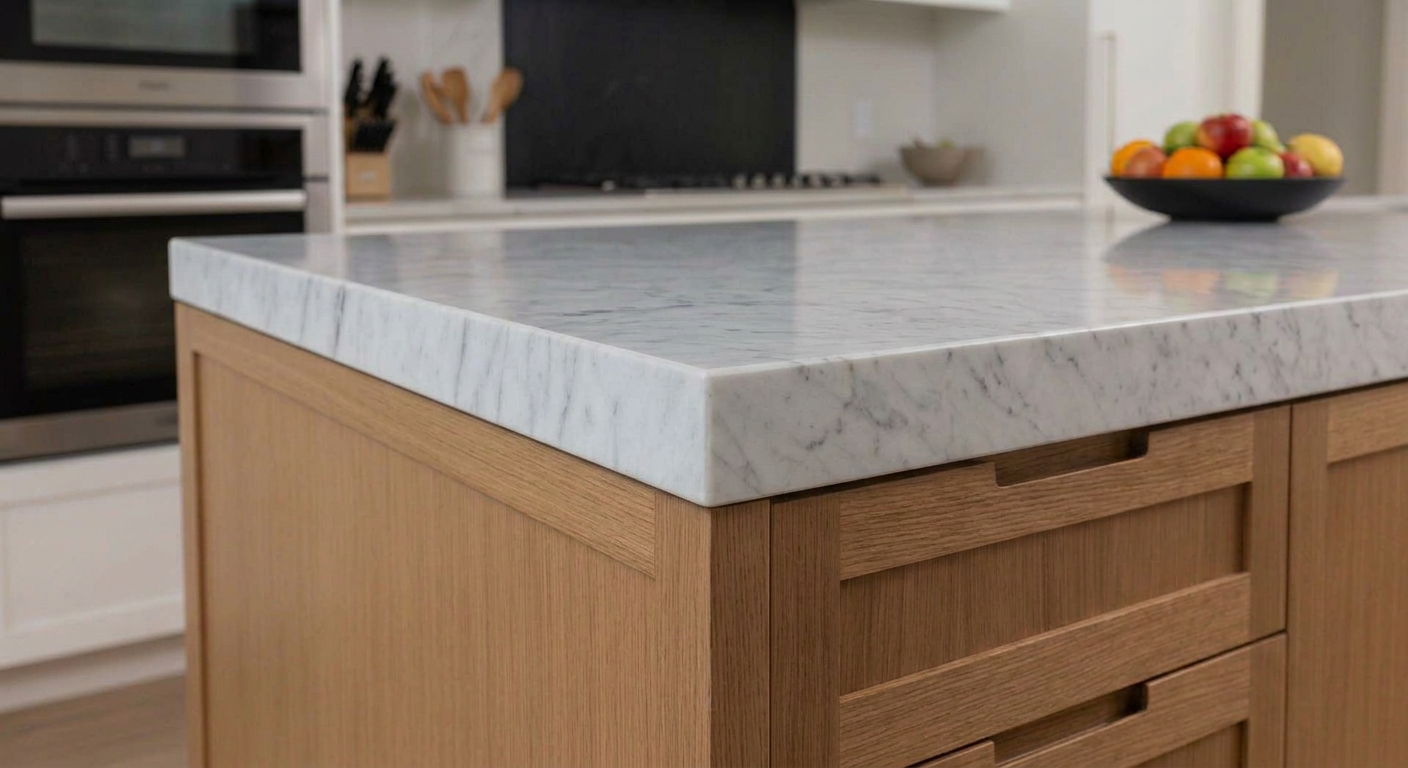
Rather than a profile shape, the mitered edge is a corner treatment: two pieces of stone are each cut at a precise 45-degree angle and joined at the seam, most commonly used to build a waterfall edge that wraps a countertop down the side of an island as one continuous-looking piece of stone.
Appearance: A clean, nearly invisible seam where two 45°-cut faces meet, creating the illusion of a single, uninterrupted slab wrapping around the corner.
Best for: Waterfall islands and any application where the stone needs to appear continuous around a corner or down a vertical face.
Why choose it: It hides the seam between slabs almost entirely, giving the countertop a bold, monolithic look that reads as one continuous piece of stone.
Ogee Step
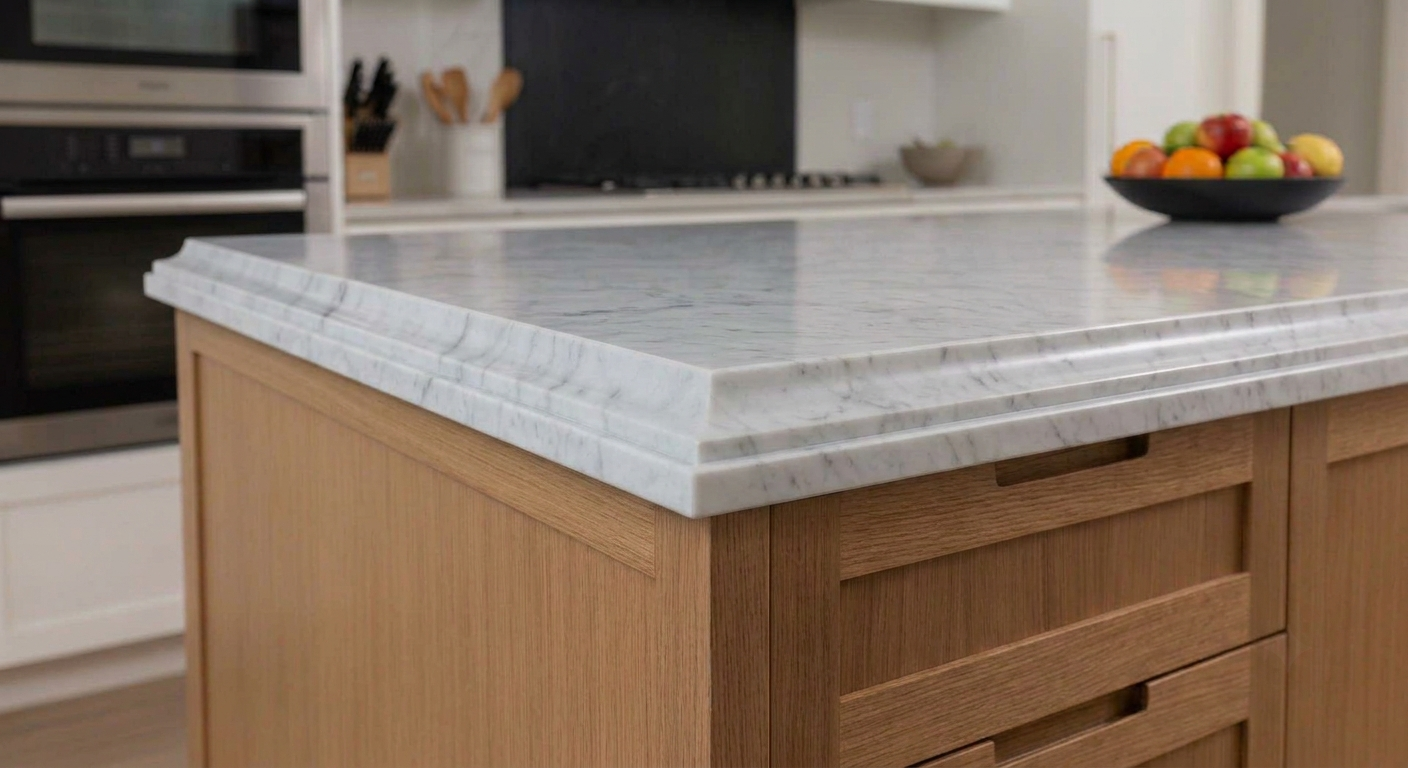
The ogee step carries the S-curve of the ogee across the top of the edge, then transitions into a stepped ledge along the doubled portion beneath.
Appearance: Elaborate and layered — a decorative curve on top giving way to a distinct horizontal step.
Best for: Traditional and formal kitchens where a thicker countertop with a highly detailed edge is the centerpiece.
Why choose it: It's one of our most ornate profiles, pairing beautifully with raised-panel cabinetry and grand, formal kitchen designs.
Step Back D-Edge
The step back D-edge keeps a crisp, flat square face on top, then steps back at a sharp right angle beneath it to reveal the doubled layer as a distinct architectural ledge.
Appearance: A flat, square top face projecting forward over a recessed square notch, with a crisp shadow line running along the step — angular throughout, with no rounding or curves.
Best for: Islands and statement countertops where a thick, sculptural edge is the goal.
Why choose it: The stepped reveal adds depth and shadow line to the edge, making it one of the more architectural and eye-catching options in our upgrade tier.
How to Choose the Right Edge for Your Project
A few things to consider as you decide:
- Style of your space: Modern kitchens almost always call for clean, simple edges (single square, single bevel). Traditional kitchens have more room for decorative upgrade profiles like ogee flush, ogee step, or step back D-edge.
- Stone thickness: Our standard tier (single square, single bevel, single bullnose, single half bullnose) uses a single-thickness slab. Upgrade profiles are built onto a double-thickness edge, giving decorative details like the ogee and step profiles more room to fully develop.
- Who uses the space: Households with young children often prefer rounded profiles (single half bullnose, single bullnose, double half bullnose, double bullnose) for safety.
- Countertop application: Islands that people gather around benefit from softer or rounded edges. Perimeter countertops are less frequently touched and can carry more decorative upgrade profiles like the ogee and step back D-edge.
At Gallant Marble, we offer a full range of edge profiles across all of our stone types — from marble and granite to quartz and porcelain. View our edge options or contact us to discuss the right profile for your project.