
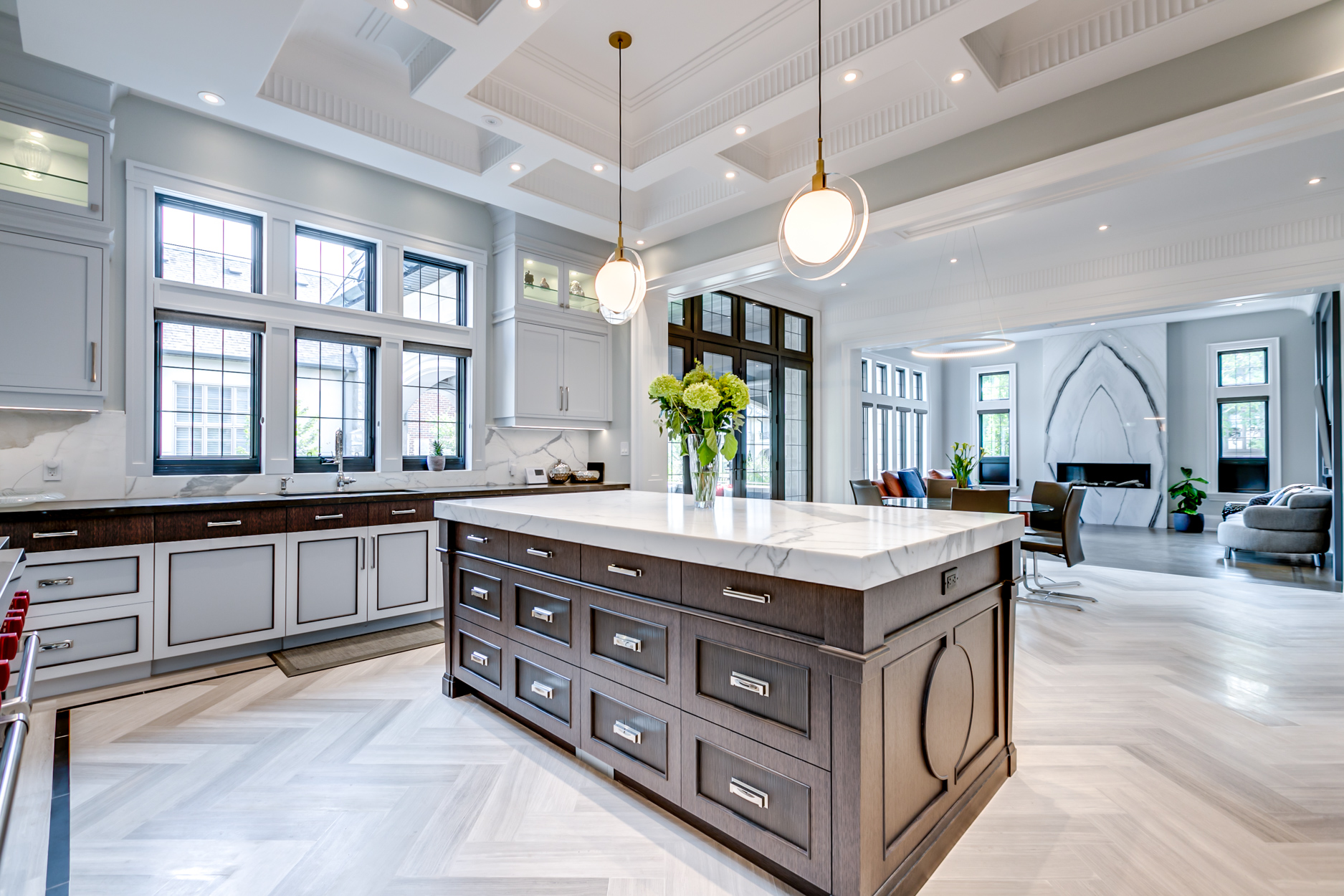
Granite and quartz are the two most popular countertop materials in Canadian homes, and for good reason. Both are beautiful, durable, and built to last. But they have distinct differences that can make one a better fit for your project. Here's a comprehensive comparison to help you decide.
What Is Granite?
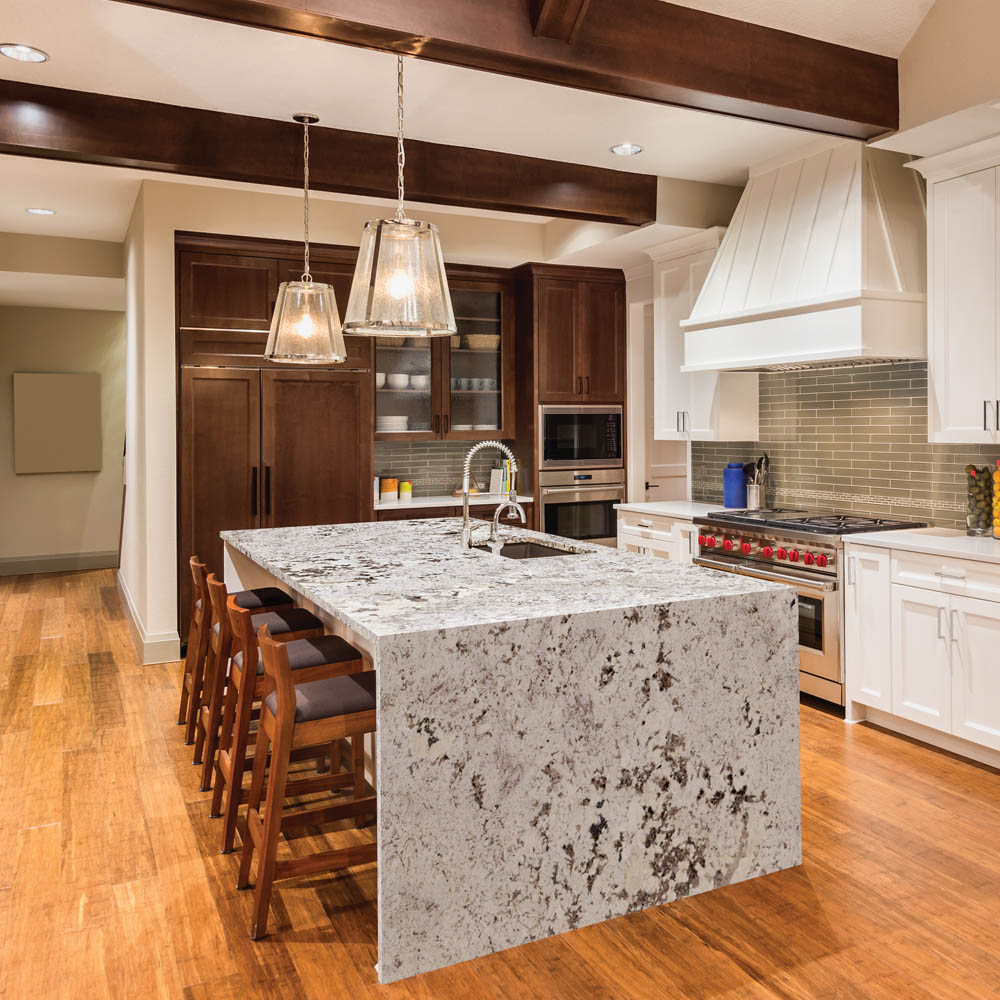
Granite is a 100% natural stone quarried from the earth. It forms over millions of years as molten rock cools and crystallizes deep underground, resulting in a hard, dense material with unique mineral patterns. Every slab is one of a kind; no two granite countertops look exactly the same.
What Is Quartz?
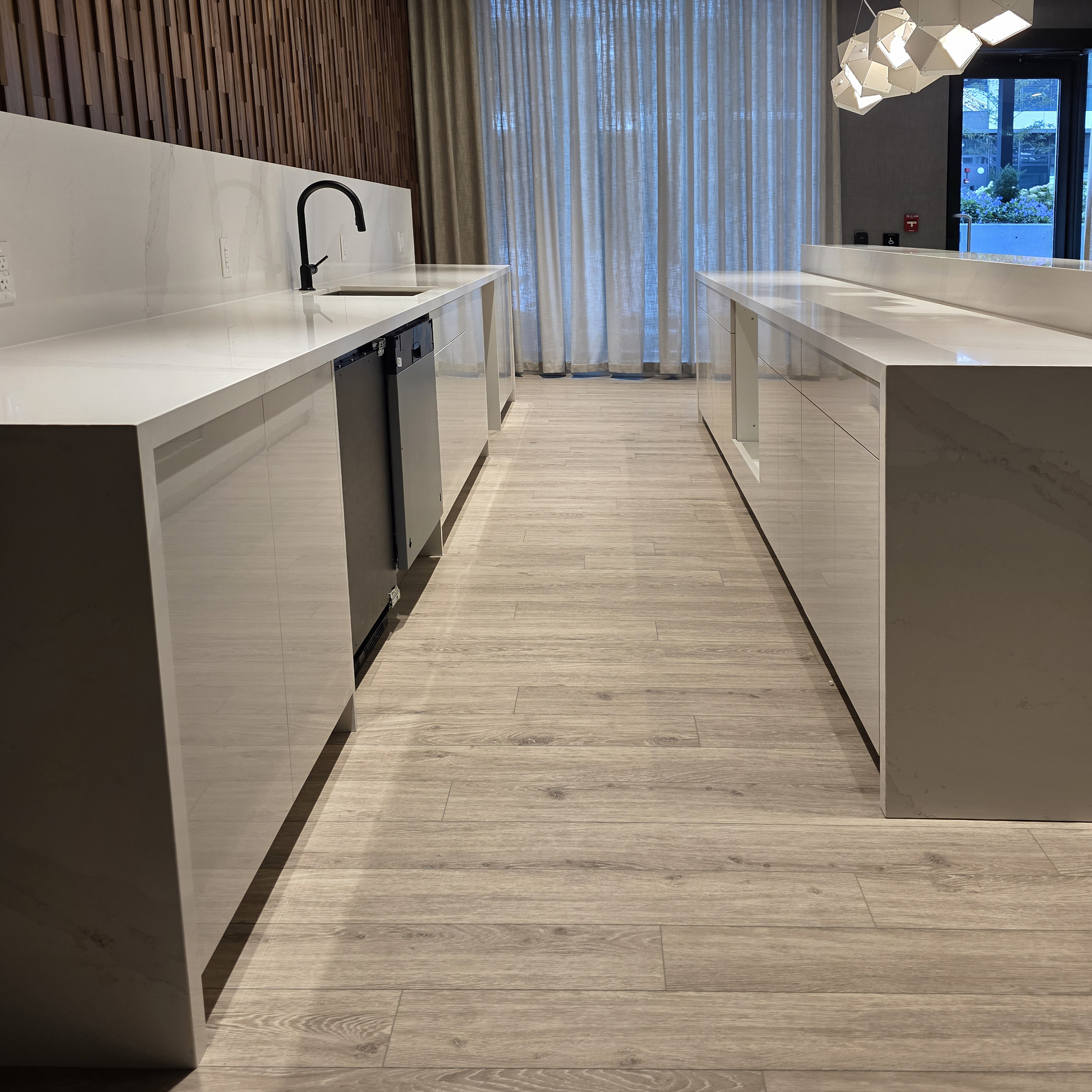
Engineered quartz countertops are manufactured by blending crushed natural quartz crystals and resin and pigments. The result is a highly consistent, non-porous surface available in a wide range of colours and patterns, including designs that mimic natural marble and stone.
Appearance
Granite offers natural variation, depth, and movement. The speckling, veining, and crystalline texture give each slab a truly unique character. If you want something that feels genuinely natural and one-of-a-kind, granite delivers.
Quartz offers a more uniform, controlled look. Premium engineered quartz can convincingly replicate the appearance of marble, concrete, or natural stone, with the added benefit of consistent patterning across multiple slabs. This makes it ideal for large installations where visual continuity matters.
Verdict: Granite for natural uniqueness; quartz for consistency and a wider colour palette.
Durability
Both materials are extremely durable, but in different ways.
Granite rates 6–7 on the Mohs hardness scale. It resists scratches and heat exceptionally well. You can place a hot pan directly on granite without risk of damage. It is, however, slightly more prone to chipping at edges than quartz if subjected to sharp impacts.
Quartz rates 7 on the Mohs scale and is slightly harder than most granite. Its engineered composition makes it more uniform in density, which can make it less prone to cracking under impact. However, quartz is not heat-resistant; the resin binders can scorch or discolour when exposed to high heat, so trivets and hot pads are a must.
Verdict: Granite for heat resistance; quartz for impact and chip resistance.
Maintenance
This is where quartz has a significant advantage for busy households.
Granite is a porous natural stone and must be sealed upon installation and periodically resealed (typically once a year) to prevent staining and bacterial absorption. Without proper sealing, liquids like wine, oil, and juice can penetrate the surface.
Quartz is non-porous by nature, meaning it never needs sealing. It resists staining from common kitchen spills and is highly hygienic, with no microscopic pores for bacteria or mould to take hold. Cleaning with mild soap and water is all that's required.
Verdict: Quartz wins for low maintenance. Granite requires sealing and periodic upkeep.
Heat & UV Resistance
Granite handles heat exceptionally well and is unaffected by direct sunlight over time. It's an ideal material for outdoor kitchens or spaces with significant sun exposure.
Quartz is vulnerable to prolonged UV exposure, and the resin can fade or discolour outdoors. It also cannot withstand direct heat from pots and pans. For kitchen use, always use trivets; for outdoor applications, granite or a natural quartzite is the better choice.
Verdict: Granite for outdoor and high-heat applications.
Cost
Both materials fall within a similar price range at the higher end of countertop options, but there is nuance.
Granite pricing varies widely depending on the rarity of the slab, country of origin, and thickness. Basic granite starts at a modest price point, while premium, exotic slabs can be quite expensive. Natural stone also has additional fabrication and sealing costs.
Quartz tends to have a more predictable pricing structure since it's manufactured. Entry-level quartz is comparable to mid-range granite; high-end designer quartz (such as Calacatta-look engineered slabs) can rival premium natural stone in cost.
Verdict: Comparable overall. Granite has more range (low to very high), while quartz is more predictably mid-to-high.
Quick Comparison Table
| Feature | Granite | Quartz |
|---|---|---|
| Composition | 100% natural stone | ~90% quartz + resin binders |
| Appearance | Unique, natural variation | Consistent, wide colour range |
| Hardness | 6–7 Mohs | ~7 Mohs |
| Heat Resistance | Excellent | Poor (use trivets) |
| Stain Resistance | Moderate (requires sealing) | Excellent (non-porous) |
| Maintenance | Annual sealing required | Low (no sealing needed) |
| UV/Outdoor Use | Yes | No |
| Cost Range | $$ – $$$$ | $$$ – $$$$ |
Which Should You Choose?
Choose granite if:
- You want a truly natural, one-of-a-kind surface
- You frequently cook at high temperatures and want heat resistance
- You're considering an outdoor kitchen or a sun-exposed space
- You appreciate the organic character of natural stone
Choose quartz if:
- You want a low-maintenance surface with no sealing requirements
- You prefer a consistent, uniform appearance
- You have a busy household with young children and need stain resistance
- You want more colour and pattern options
Where We Source Our Stone
Gallant Marble partners with trusted suppliers across both categories to offer you a wide, curated selection.
For Quartz, our primary brand we use is Moonstone, a premium engineered quartz line with a broad range of colours and finishes tailored for Canadian homes. We also carry selections from Caesarstone, HanStone Quartz, Vicostone, and Silestone, among others. Check out our 10 most popular quartz colours to see what's trending.
For Granite, we source from leading distributors including Ciot, Marble Trend, Stone Tile, and MSI, giving us access to thousands of slab options from quarries around the world.
Our Recommendation
The right choice comes down to your lifestyle, your space, and what matters most to you. Both granite and quartz are exceptional materials, and there's no wrong answer when either one is installed with care and craftsmanship.
Trusted since 1997, Gallant Marble has been fabricating and installing countertops for homeowners and contractors across Markham, Richmond Hill, and the Greater Toronto Area. Whether you're leaning toward the natural character of granite or the low-maintenance performance of quartz, our team can help you select the right slab, edge profile, and finish for your project. Contact us to inquire about availability, pricing, and lead times, or request a quote to get started.