
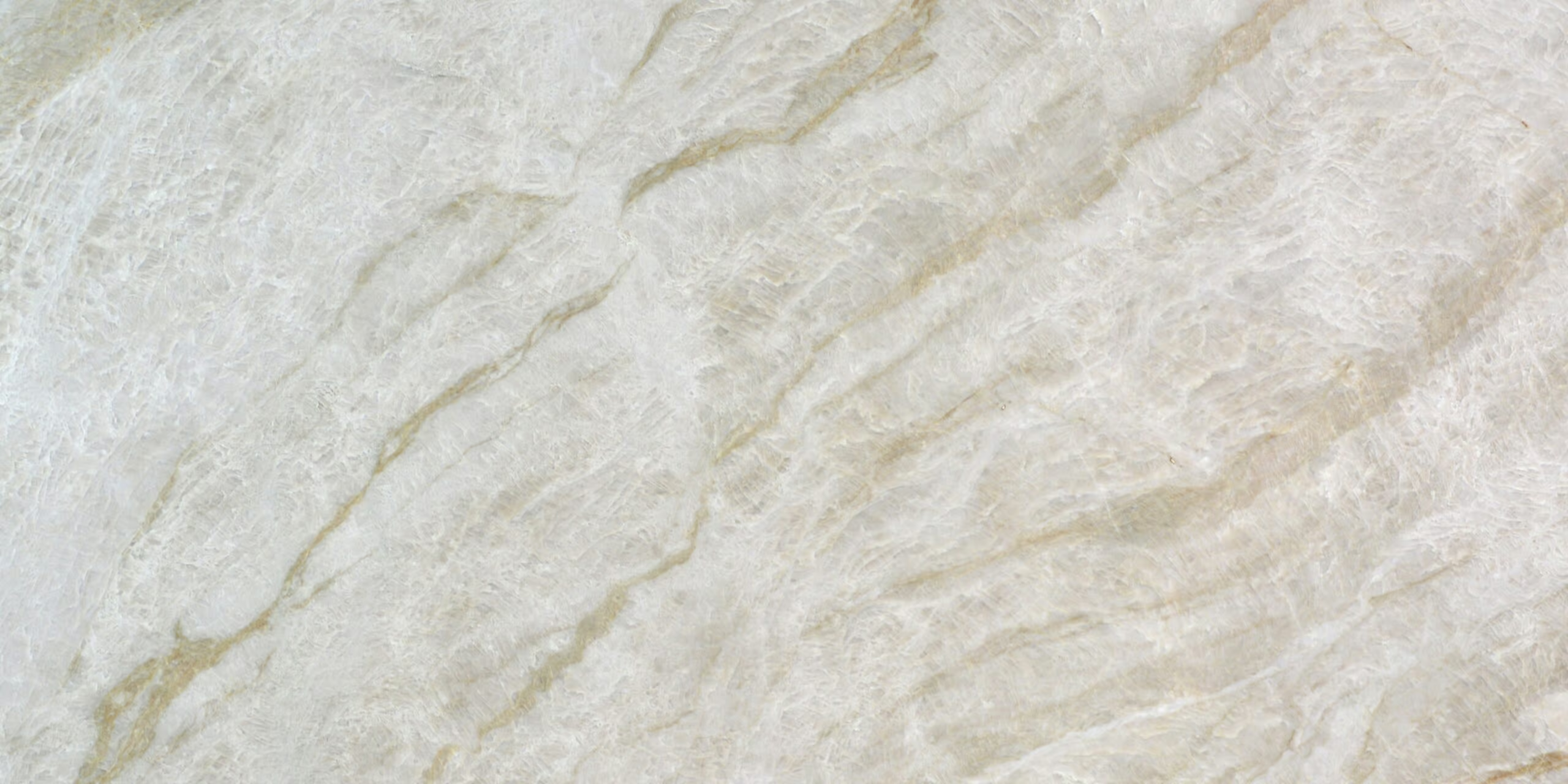
Before you read another word, open Instagram or Pinterest and search taj mahal quartzite countertops. What you'll find is hundreds of stunning kitchen photos — warm, creamy stone with soft gold tones and gentle flowing veins running through it, showing up in everything from bright white Shaker kitchens to bold two-tone designs. That stone is Taj Mahal quartzite, and there's a good chance you've already fallen for it without knowing its name. It's everywhere right now, and for good reason: it manages to feel both timeless and completely current, luxurious without being cold, and natural without being rustic. It's the rare material that works in almost any kitchen, and designers have taken notice.
Why Taj Mahal Is the Stone of the Moment
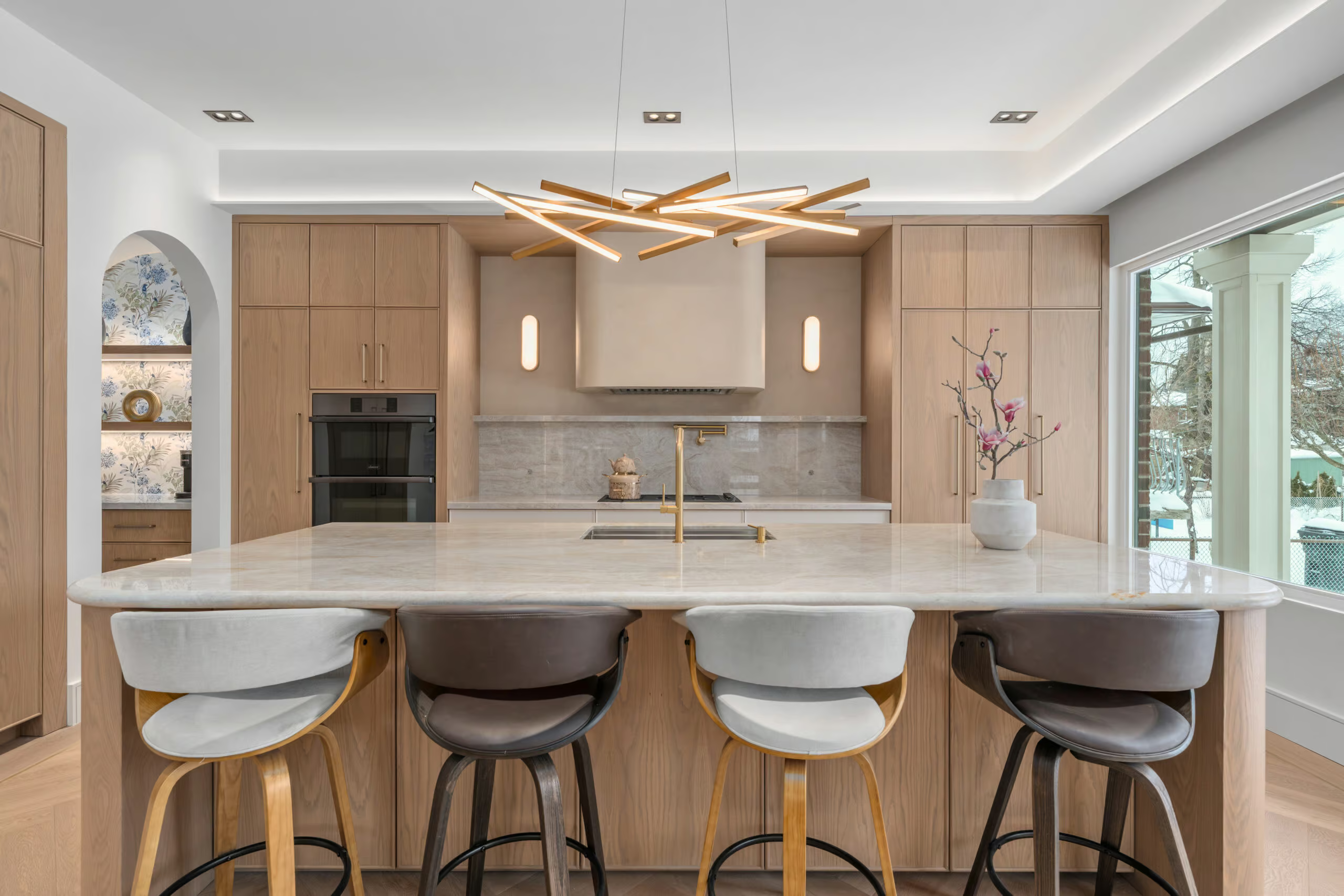
Kitchen design has been moving in a clear direction over the past few years, shifting away from stark white-on-white minimalism and toward warmth, texture, and organic materials. Warm wood tones, unlacquered brass, fluted panels, and terracotta accents have replaced chrome, gloss cabinetry, and pure white everything. Taj Mahal quartzite fits this shift perfectly.
Its palette of soft cream, warm ivory, and whispers of gold and pale grey sits at the intersection of natural and refined. It reads warm enough to feel inviting but neutral enough to anchor almost any colour scheme. It has the visual weight of a luxury material without the coldness that sometimes comes with it.
There's also the marble factor. Carrara and Calacatta marble have dominated aspirational kitchen imagery for years, but issues like acid etching, staining, and constant maintenance have pushed many homeowners to look for alternatives. Taj Mahal delivers the aesthetic of high-end marble while being significantly more practical. That combination has made it one of the most-requested stones we see at the shop, consistently year over year.
From the Mountains of Brazil to Your Kitchen
Despite its name, Taj Mahal quartzite has no connection to India. It is quarried in the state of Espírito Santo in southeastern Brazil, one of the world's most prolific natural stone regions. The stone's signature warm cream tones and soft gold veining are a direct result of the local geology — the specific mineral composition of that region, built up over hundreds of millions of years, simply cannot be replicated anywhere else. The name was coined by stone traders to evoke the regal, luminous quality of the material, and the comparison stuck.
The Look: Color, Veining, and Movement
Understanding why Taj Mahal is so photographically compelling starts with its color story. The base is a warm off-white, somewhere in the range of fresh cream or aged linen, neither stark nor yellow. Running through it are veins of soft grey, warm taupe, and gold, which move across the surface in long, fluid sweeps rather than sharp fractures.
The veining pattern on Taj Mahal tends to be more open and flowing than on Calacatta or Statuario marble. The movement is gentler and the contrast softer than you'd find in more dramatic stones. This is actually one of its design strengths: it has presence without being busy. A large kitchen island in Taj Mahal reads as one cohesive, beautiful surface rather than a chaotic mosaic of veins and color.
The warmth in the stone also behaves well under different lighting conditions. Under cool LED light, the cream tones read cleaner and more contemporary. Under warm light, the gold undertones come forward and the stone takes on an almost glowing quality. It's one of the few stones that looks distinctly good in both conditions.
Finish Options and Their Design Impact
The finish you choose changes Taj Mahal's personality considerably, and it's worth understanding the difference before you commit.
Polished
A polished finish amplifies the stone's luminosity. The surface becomes reflective, the colours deepen slightly, and the veining gains contrast and clarity. Polished Taj Mahal reads more formal and classical, suiting kitchens where the countertop is meant to be a statement, particularly on large islands or waterfall edges where the surface is highly visible. The trade-off is that it shows fingerprints and watermarks more readily, though these wipe away easily.
Honed
A honed finish gives Taj Mahal a soft, matte surface with no shine. The colours shift slightly warmer and the stone takes on a velvety, tactile quality. Honed is the more casual, contemporary choice, well-suited to transitional and Scandinavian-influenced kitchens, and it's far more forgiving about everyday marks and water spots. Most designers working with sage green or wood-tone kitchens gravitate toward honed.
Leathered / Brushed
A leathered or brushed finish adds a subtle texture to the surface, creating a slightly rough, dimensional feel that catches light differently across the slab. It's the least common of the three but arguably the most distinctive. Leathered Taj Mahal works beautifully alongside natural wood and raw materials, and it hides everyday use better than polished.
Kitchen Styles That Pair Well With Taj Mahal
Taj Mahal's warm neutral palette bridges traditional and contemporary styles without effort, and that versatility is one of its greatest design advantages. Below are five kitchen directions that work beautifully with this stone.
1. White Shaker Cabinets
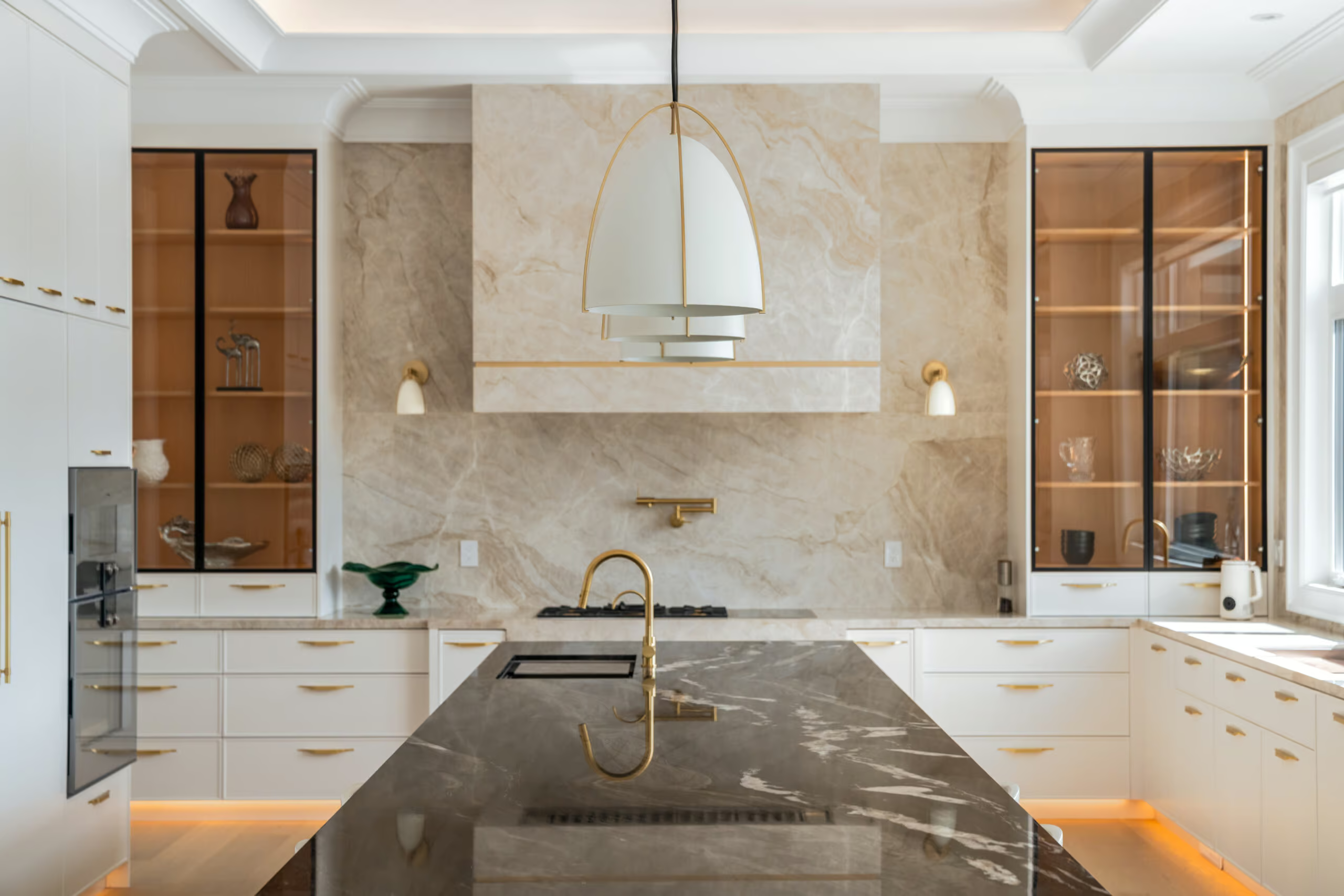
The most popular pairing, and for good reason. Bright white shaker cabinetry creates a clean, airy backdrop that lets Taj Mahal's warm tones and natural veining take centre stage. The contrast between crisp white paint and the organic movement of the stone gives the kitchen depth without feeling heavy. This is the combination that fills most of the inspiration boards, and in person it delivers every bit as well as it looks in photos.
Best finish: Polished or honed
Hardware: Brushed brass or matte gold
2. Natural Wood Lower Cabinets
Combining natural wood lowers such as white oak, walnut, or maple with white uppers and Taj Mahal countertops creates a warm, organic kitchen that feels grounded and contemporary at the same time. The stone's golden undertones echo the warmth of the wood grain, making the material transition feel intentional. This pairing photographs with exceptional richness and is currently one of the most popular combinations in high-end residential projects across the GTA.
This combination works especially well in open-concept kitchens where the countertop acts as a visual bridge between the cooking zone and the living area.
Best finish: Leathered or brushed, as the texture complements the wood grain
Hardware: Matte black or oil-rubbed bronze
3. Sage Green or Dusty Blue Cabinets
Muted greens and soft blues have become enormously popular in kitchen design over the last several years, and Taj Mahal is one of the best countertop materials to pair with them. The stone's warm cream base softens the coolness of sage or blue-grey paint, creating a balanced, sophisticated palette that photographs exceptionally well. This is the combination that has dominated design awards and editorial features for the past two years running.
This combination works across a range of cabinet styles, from traditional Shaker to flat-panel modern, making it a versatile choice for a variety of home aesthetics.
Best finish: Honed for a soft, cohesive matte look
Hardware: Brushed nickel or aged brass
4. Charcoal or Dark Grey Cabinets
For a bolder, more dramatic kitchen, pairing Taj Mahal with deep charcoal or dark grey cabinetry creates a striking light-on-dark contrast. The stone's pale, luminous surface pops against dark cabinetry the same way white marble does, but the warmth in Taj Mahal prevents the combination from feeling stark or clinical. The result is drama with depth, not coldness.
Best finish: Polished, as the reflective surface maximizes the light contrast against dark cabinets
Hardware: Matte black or polished chrome
5. Transitional Two-Tone Kitchens
Two-tone kitchens, typically white uppers paired with a contrasting colour on the lowers or island, are an ideal canvas for Taj Mahal. The stone unifies both cabinet colours and adds a natural, luxurious surface that elevates the overall composition. It acts as a visual mediator, carrying warmth from one zone to another and tying the whole palette together.
Best finish: Polished for islands; honed for perimeter runs
Hardware: Mixed metals (brushed gold + matte black) work well with the stone's natural warmth
The Waterfall Island: Taj Mahal's Signature Statement
If there's one application that has cemented Taj Mahal's status as the defining stone of this design era, it's the waterfall island. A waterfall edge wraps the countertop material down over the sides of the island to the floor, turning the island into a sculptural object rather than just a functional surface.
Taj Mahal is particularly well-suited to this treatment because its veining pattern can be bookmatched: two mirrored slabs are opened like a book and aligned at the seam, creating a symmetrical pattern that runs from the top surface down the side in one continuous, intentional movement. The result is genuinely stunning: the island becomes the focal point of the entire kitchen.
Bookmatched waterfall islands require careful slab selection and precise fabrication, but the visual payoff is significant. If you're investing in a kitchen renovation and want one element that will remain current and impressive for years, this is it.
Why It Performs as Well as It Looks
A stone this beautiful would be easier to justify if it were also low-maintenance, and Taj Mahal largely delivers on that front. As a true quartzite, it rates 6.5–7 on the Mohs hardness scale. That puts it significantly harder than marble, which means it resists scratching under normal kitchen use. It also doesn't react to acidic foods the way marble does, so lemon juice, vinegar, and tomato sauce won't etch the surface.
It does need to be sealed on installation and lightly resealed once a year, but this is a straightforward process and nothing like the anxiety that comes with owning unsealed marble. Sealing once a year in exchange for a natural stone surface that holds up to real daily use is a trade-off most homeowners are happy to make.
Is Taj Mahal Quartzite Right for You?
It's an excellent choice if:
- You love the look of marble but want a surface that holds up to real daily use
- Warmth and elegance are the priority in your kitchen design
- You're planning a statement island or waterfall edge feature
- You want a natural stone that photographs beautifully and ages gracefully
Consider alternatives if:
- You want a fully maintenance-free surface (engineered quartz like Moonstone requires no sealing)
- You're looking for a very cool, white palette (Taj Mahal reads warm; Bianco Carrara or Super White may suit you better)
- Your design direction is very minimal or industrial and warm tones would conflict
Getting Started
Gallant Marble has extensive experience working with quartzite and a wide range of natural and engineered stone materials. Whether you've set your heart on Taj Mahal or are still exploring other colours and stones, our team can guide you through the options and help you find the right fit for your kitchen. We work directly with slab suppliers, so we can source material, walk you through finish and edge choices, and give you a detailed quote based on your actual kitchen layout.
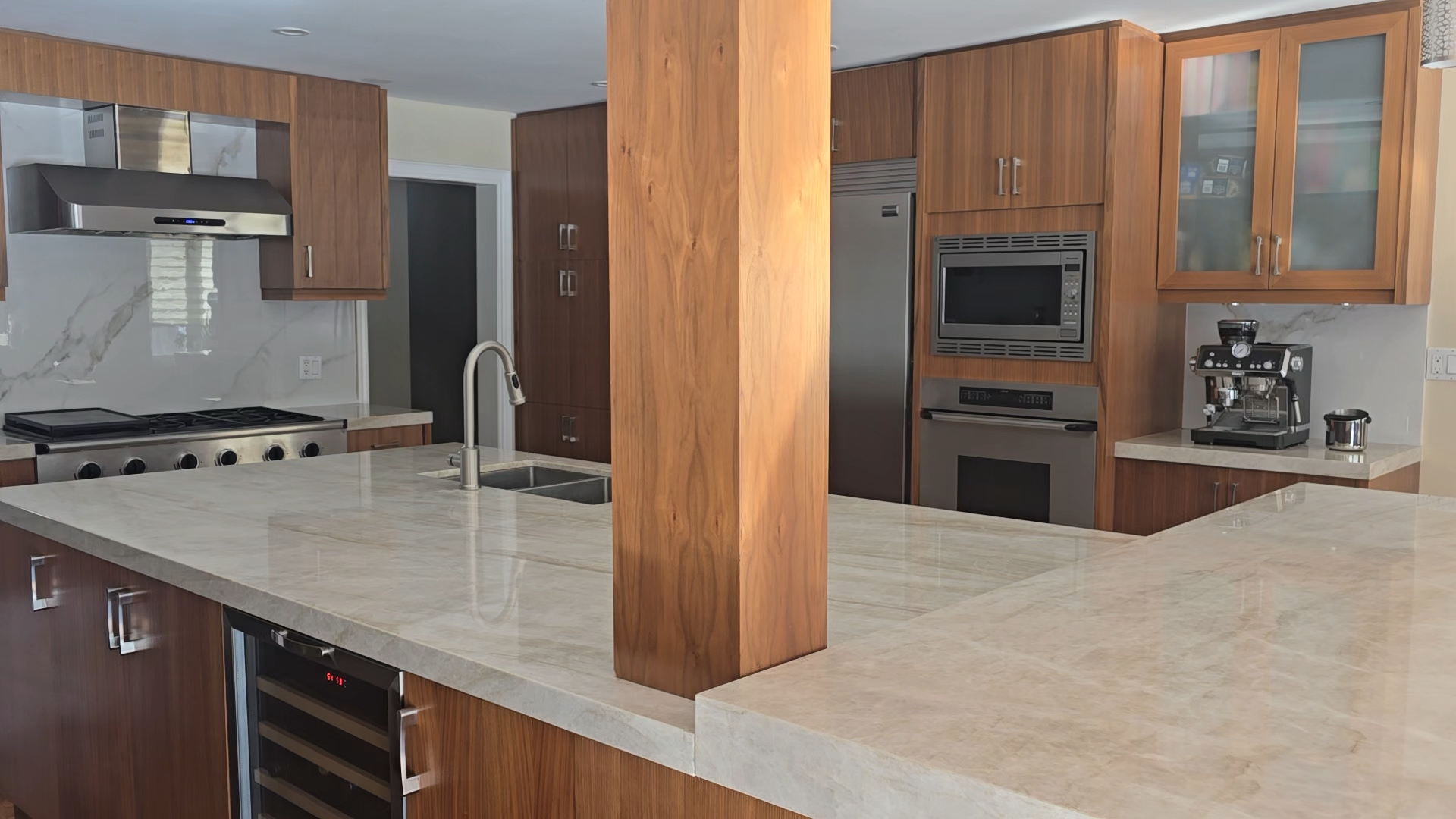
The kitchen below is one of our own completed projects — a Taj Mahal quartzite installation that shows how the stone performs in a real residential setting. The warmth, the veining, and the fabrication quality are exactly what you can expect when you work with us.
Request a quote to get the process started, or contact us to discuss your project and ask about what's currently available.